The 30-Second Exam Hall Shortcut: ⚡ Cell Cycle Order Rule
Interphase (G₁ -> S -> G₂) followed by Division (M)!
Step-by-Step Rigorous Workflow & Mathematical Proof
Interphase and its Sub-phases
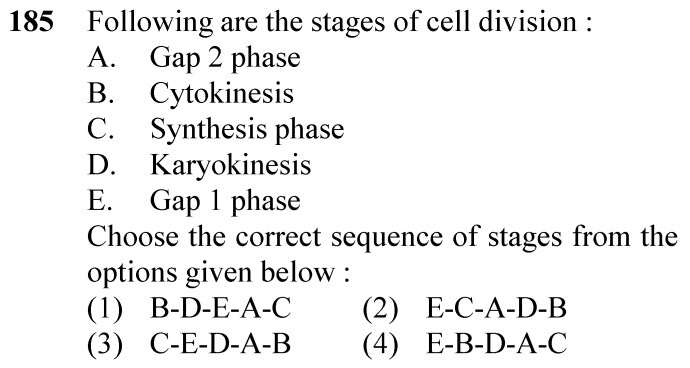
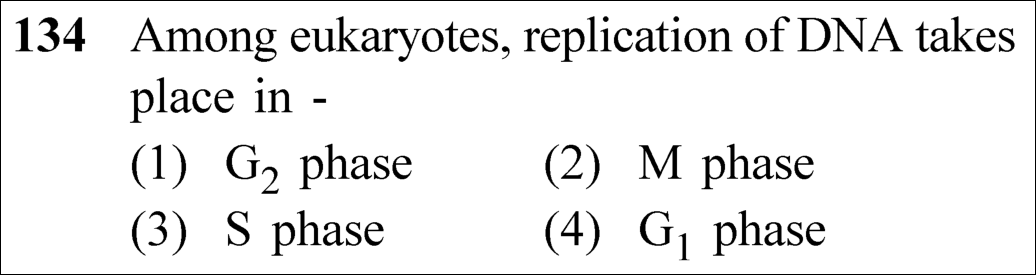
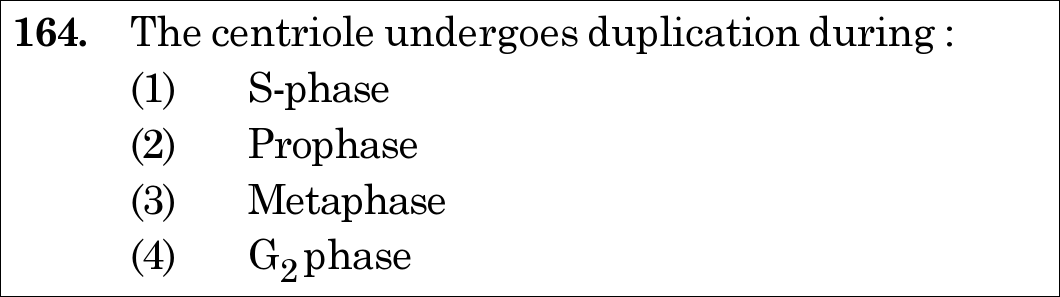
The cell cycle is divided into two basic phases: Interphase (which occupies over 95% of cycle duration) and M Phase (mitosis). Interphase is divided into three sequential periods: G₁ phase, S phase, and G₂ phase.
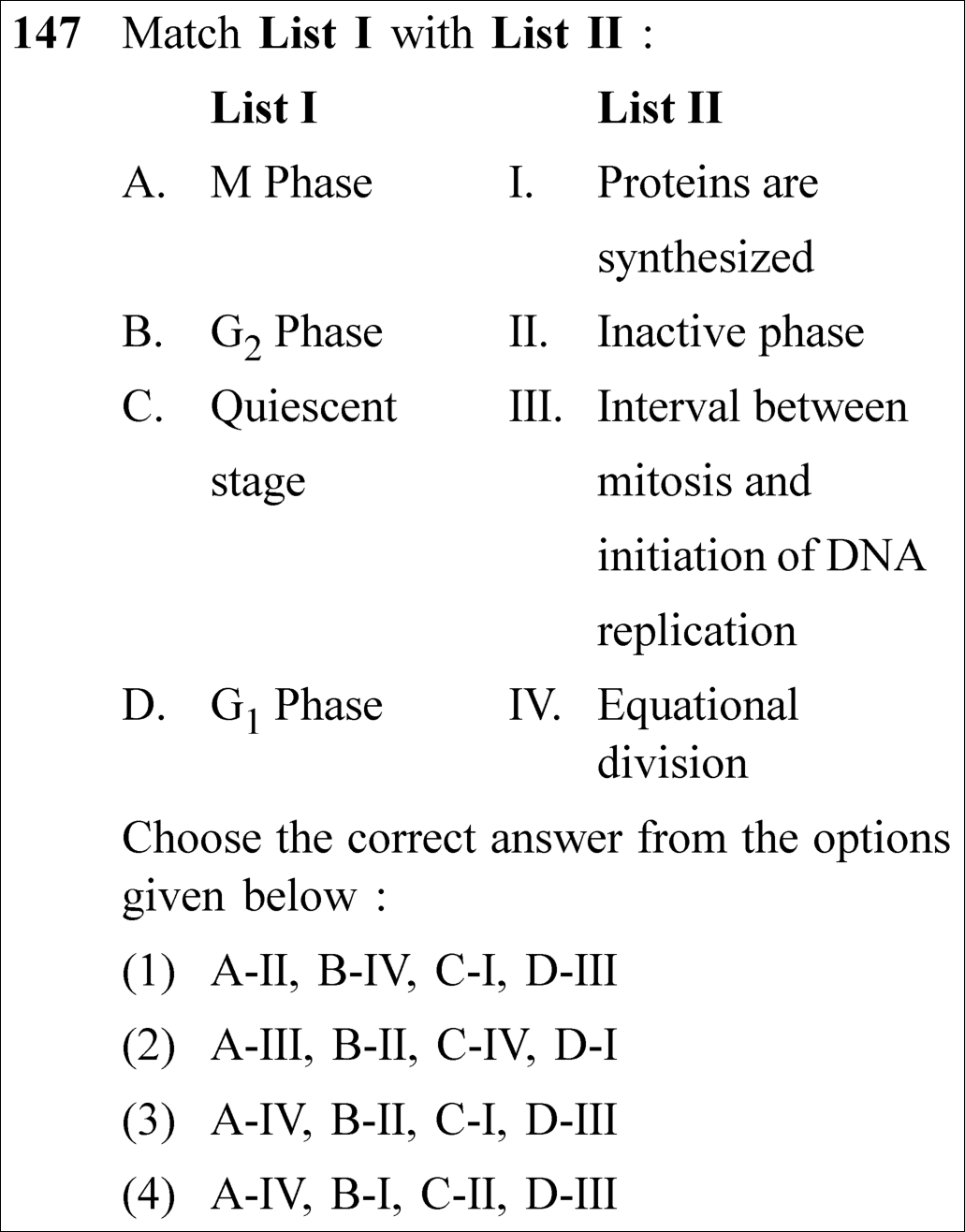
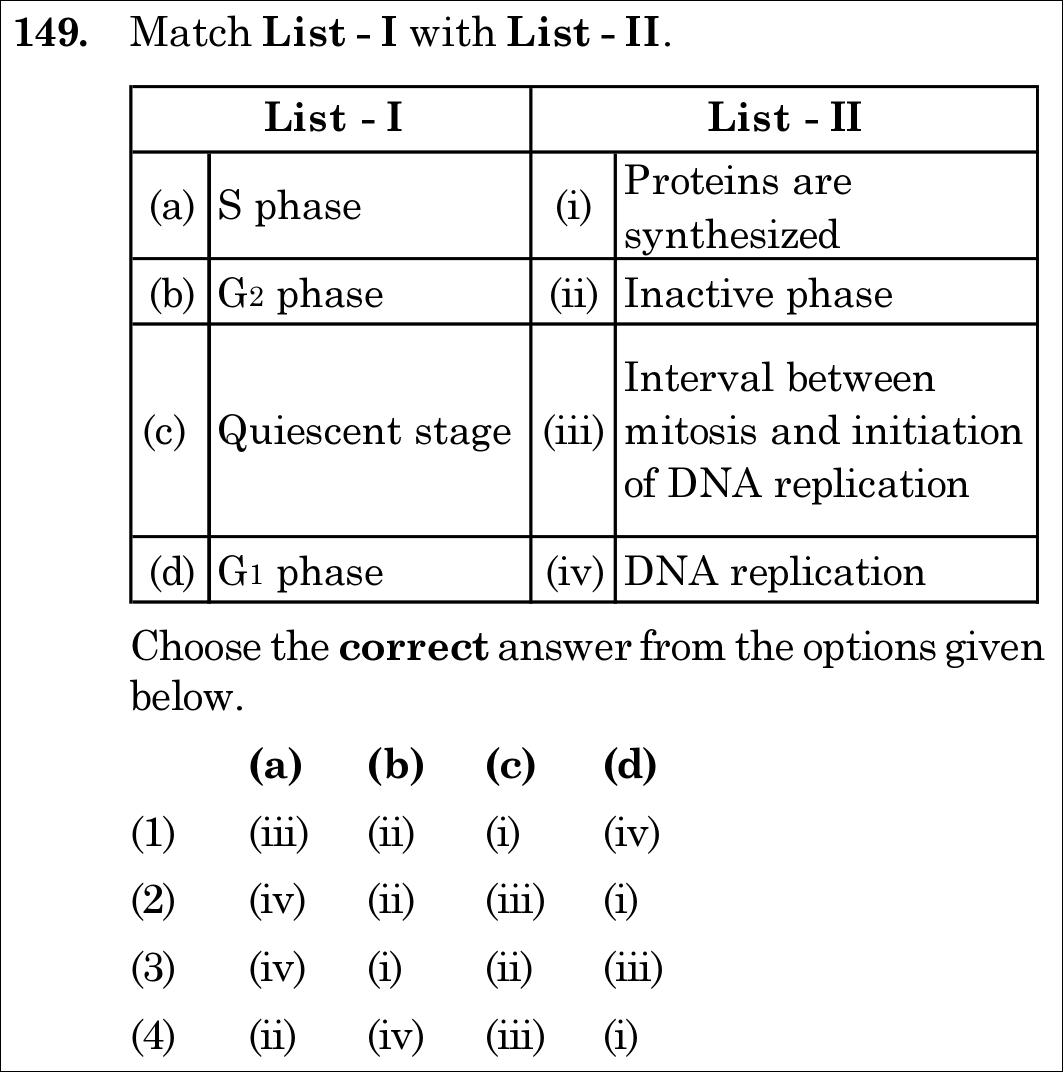
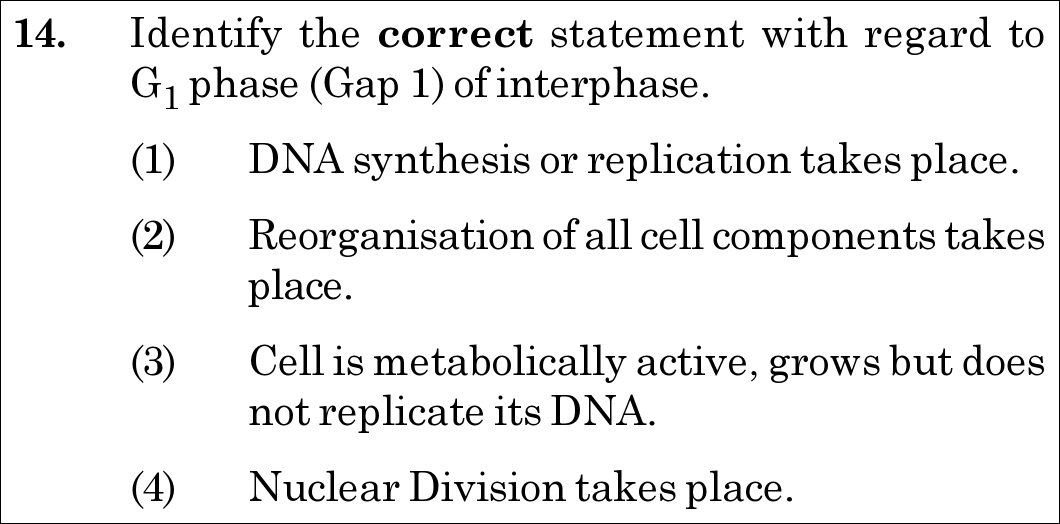
- • G₁ (Gap 1): Interval between mitosis and initiation of DNA replication.
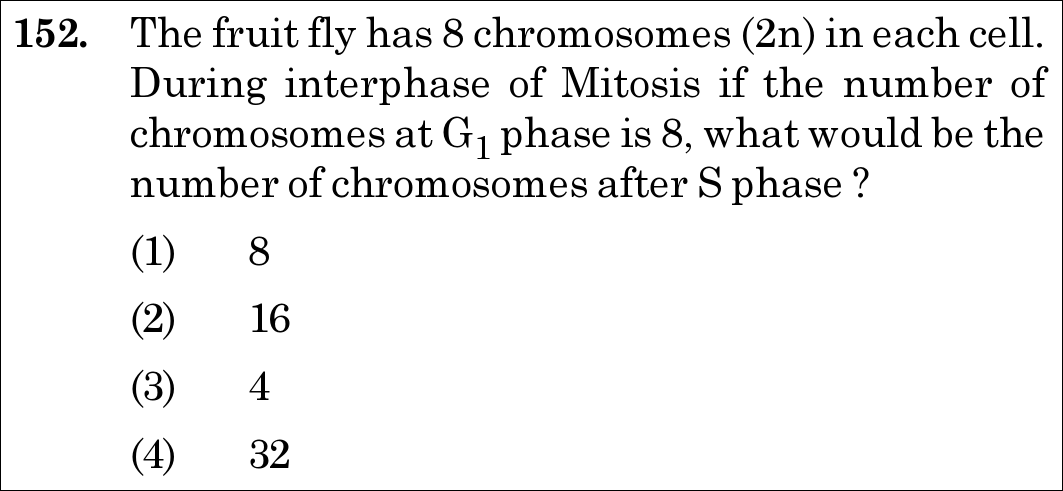
- • S (Synthesis): DNA replication doubles DNA content from 2C to 4C while chromosome number remains 2n.
- • G₂ (Gap 2): Proteins are synthesized in preparation for mitosis while cell growth continues.
Transition to M Phase
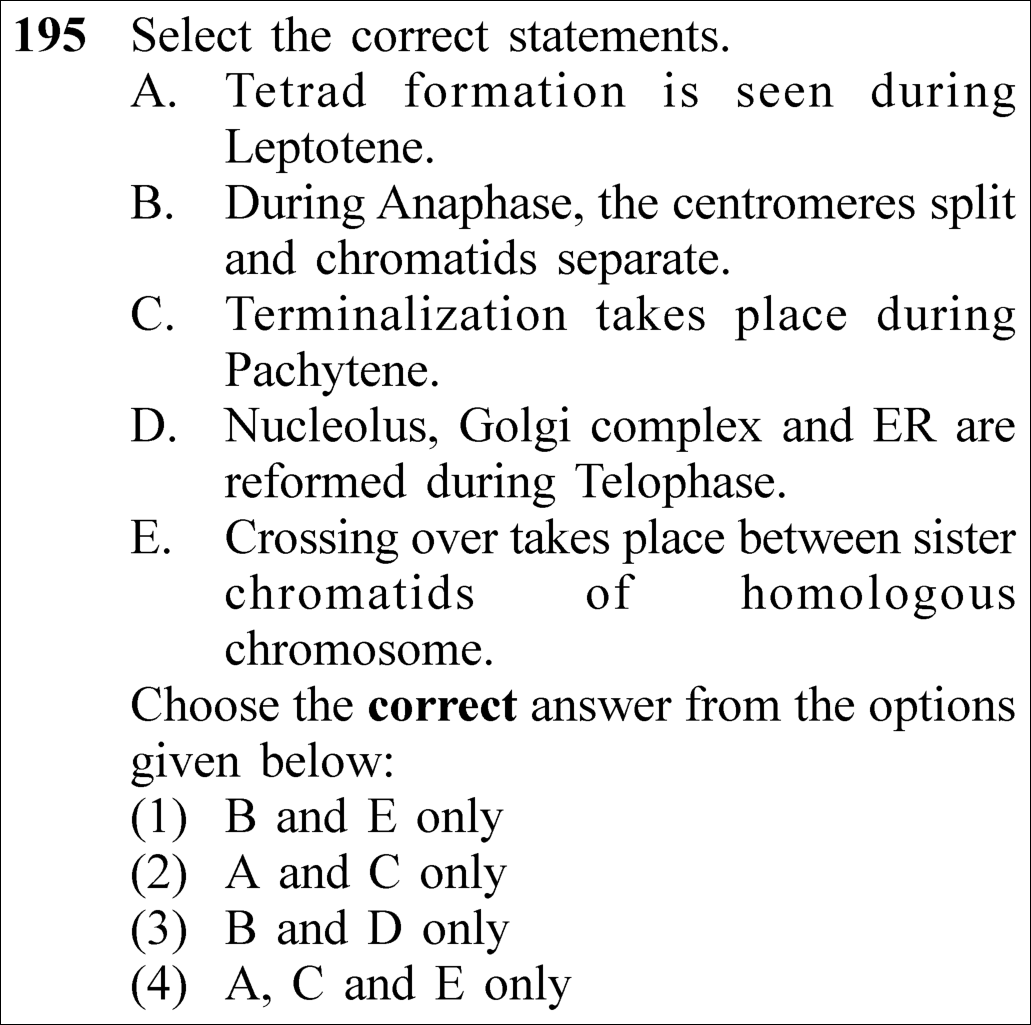
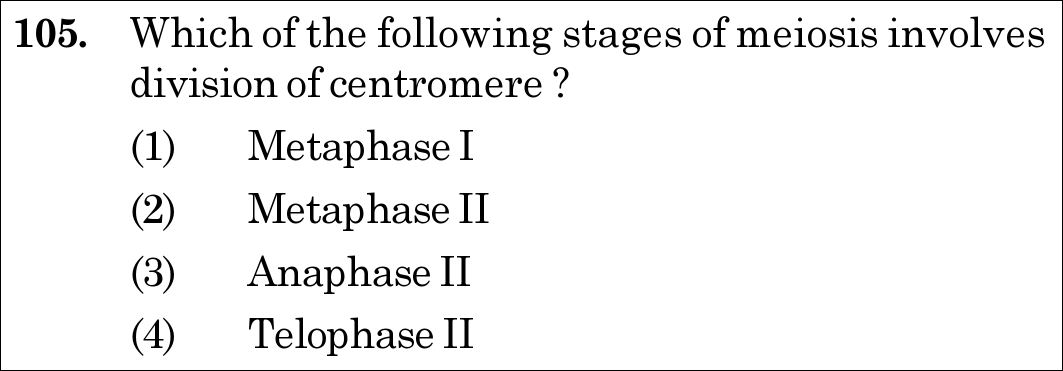
Following G₂, the cell enters the M phase (mitosis), where sister chromatids are partitioned equally into two daughter cells through prophase, metaphase, anaphase, telophase, and cytokinesis.
- • Matches Option (3).
Eliminate Other Sequences
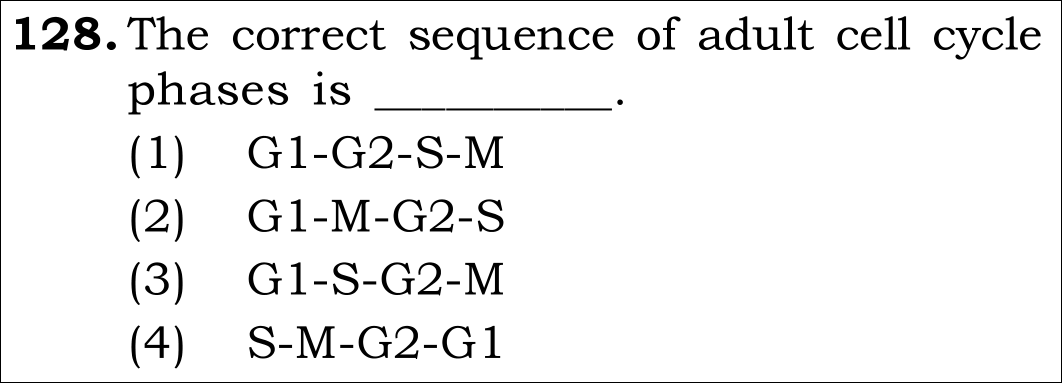
Option (1) places G₂ before S (physically impossible as DNA must be copied in S before G₂). Option (2) places M between G₁ and G₂. Option (4) scrambles the sequence completely.
- • Matches official NTA final answer key Option C / (3).
360° Option Elimination Engine Key Feature
Diagnose every choice: Know exactly why the right option works and why distractors fail.
Incorrect. Swaps G₂ and S phases.
Incorrect. Places M phase right after G₁ before DNA synthesis.
100% accurate. Canonical sequential progression of the eukaryotic cell cycle.
Incorrect. Places M directly after S without G₂ preparation.
NTA Trap Alert: Gap Phase Grouping Fallacy
Beginners sometimes imagine that "Gap 1" and "Gap 2" must happen together (G1-G2-S-M). S phase is the indispensable middle bridge where DNA replicates.
Core NEET Syllabus Standard
"The eukaryotic cell cycle progresses in an invariant unidirectional sequence: G₁ phase -> S phase -> G₂ phase -> M phase."