The 30-Second Exam Hall Shortcut: ⚡ Alkaline Gut Trigger Rule
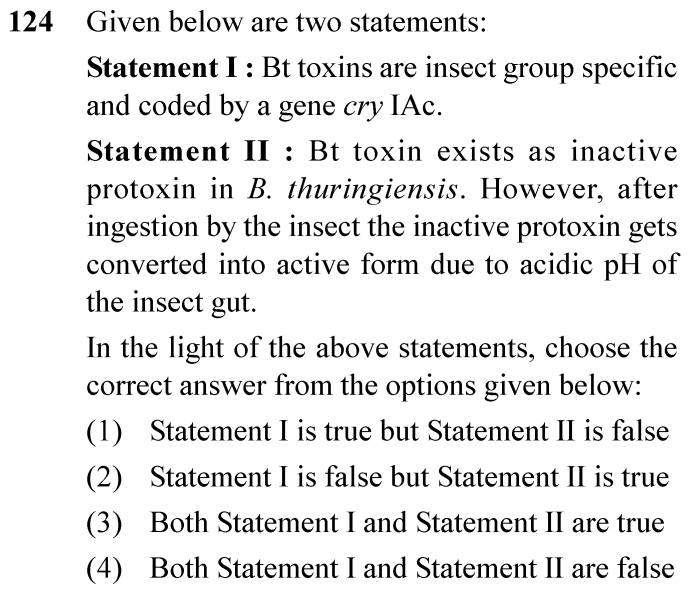
Insect Midgut = Alkaline pH (Solubilizes Crystals) -> Lytic Pores -> Death!
Step-by-Step Rigorous Workflow & Mathematical Proof
Synthesis of Inactive Protoxin Crystals
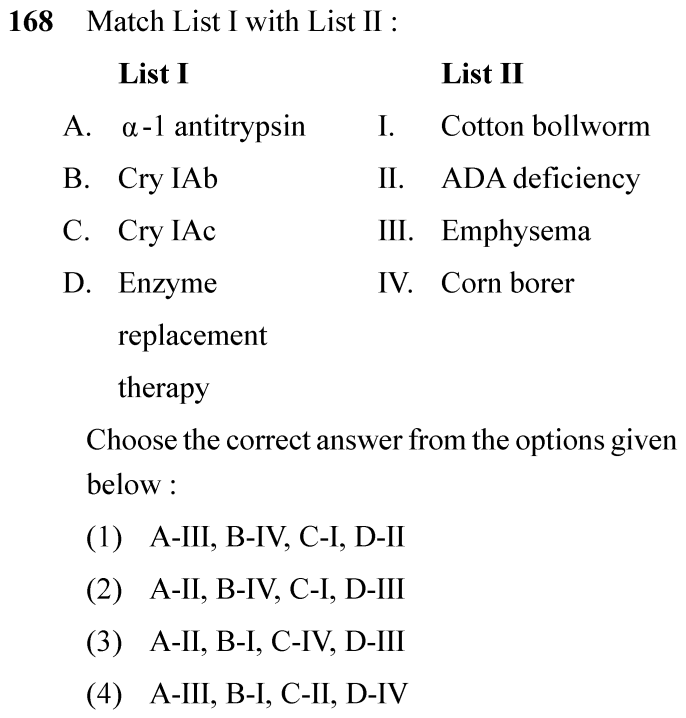
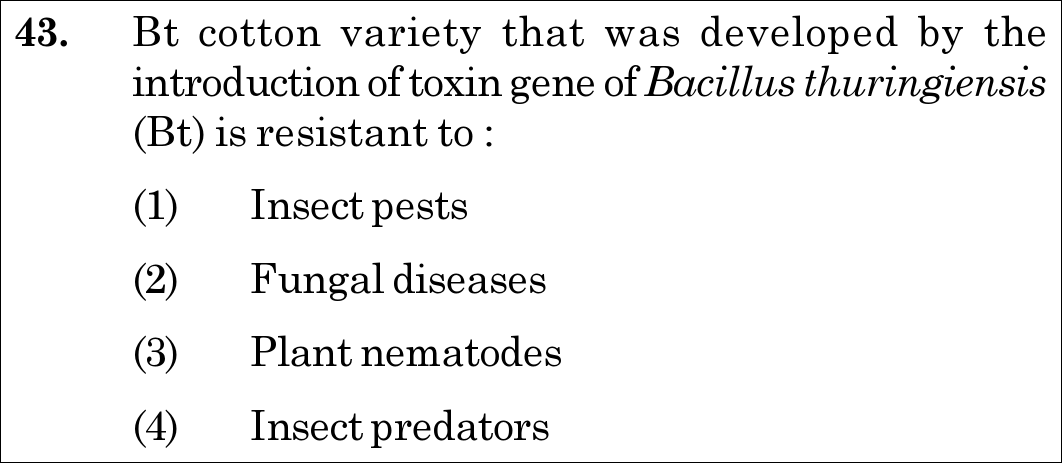
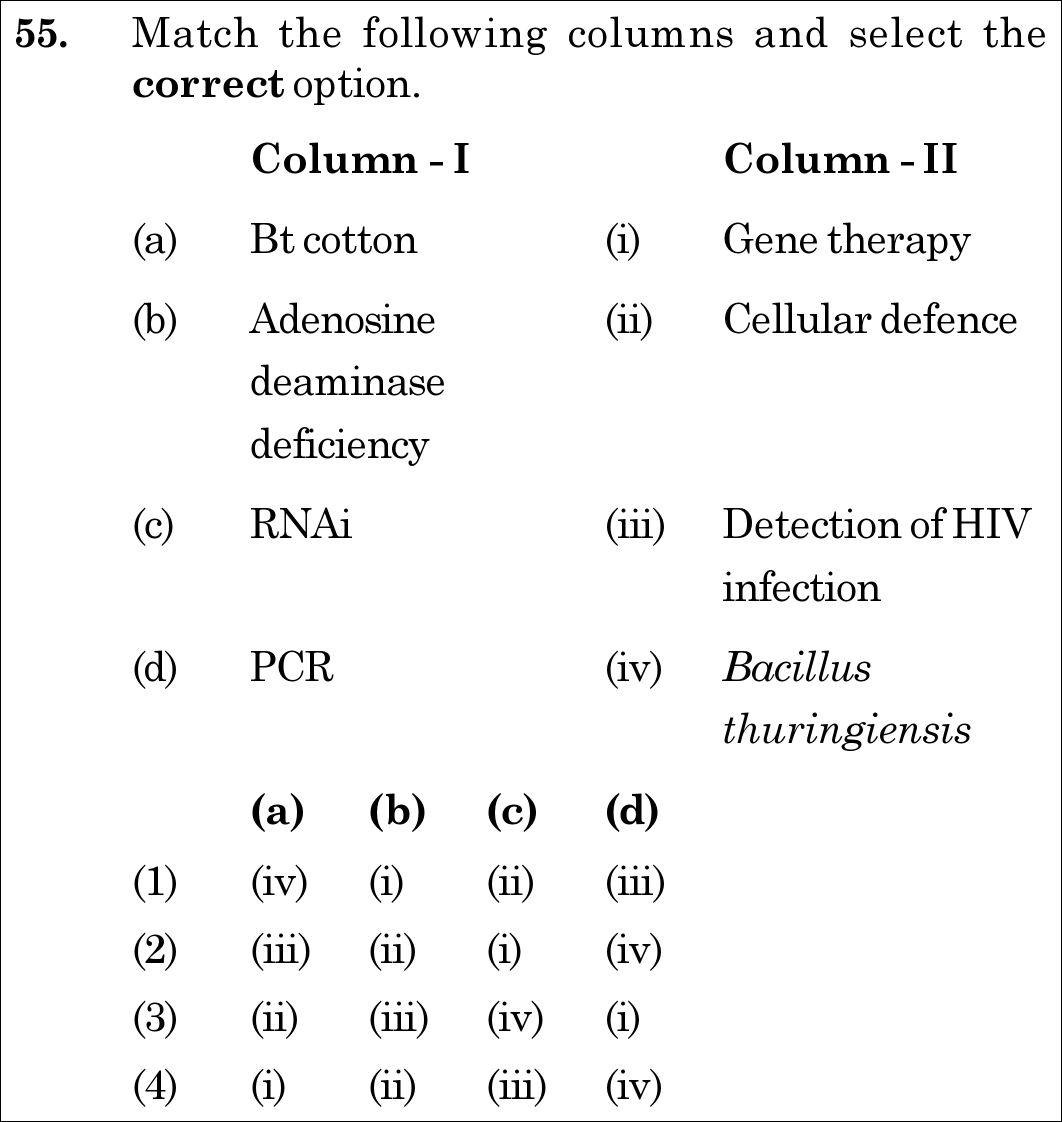
Bacillus thuringiensis produces intracellular protein crystals during sporulation containing toxic insecticidal Cry proteins. Because the crystals are insoluble at neutral/acidic pH, the protoxin remains non-toxic to the bacterium.
- • Harmless to bacteria and non-target mammals.
Solubilization in Alkaline Insect Midgut
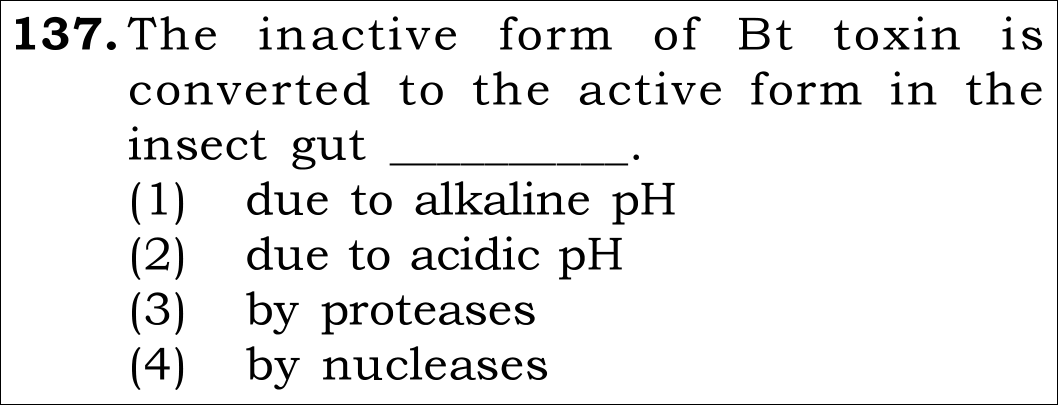
Susceptible insect larvae possess a strongly alkaline midgut environment (pH 9.0–10.5). Upon ingestion, the high alkaline pH solubilizes the crystal proteins into active monomers.
- • Midgut proteases then clip terminal residues to liberate the ~60 kDa active core.
Epithelial Pore Formation and Lysis
The activated toxin binds to cadherin receptors on the surface of midgut epithelial cells, inserting into the membrane to create open pores that cause osmotic swelling, cell lysis, gut paralysis, and death.
- • Alkaline pH is the indispensable initial chemical trigger.
360° Option Elimination Engine Key Feature
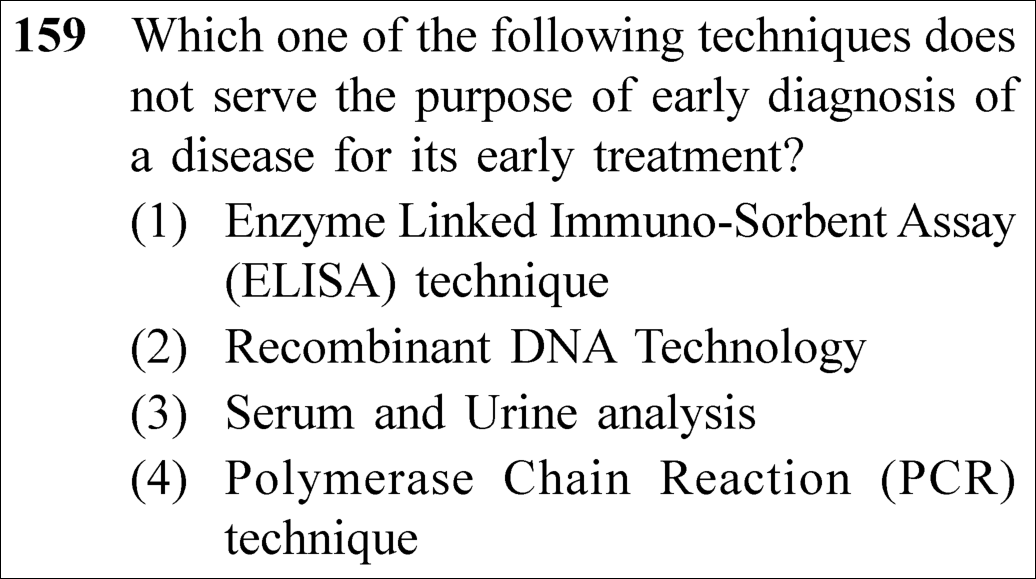
Diagnose every choice: Know exactly why the right option works and why distractors fail.
100% accurate. Canonical physiological trigger that solubilizes crystalline Bt protoxin in insect midgut.
Incorrect. Acidic pH stabilizes the insoluble crystal and prevents activation (as in human stomach).
Incorrect. Proteases cannot digest or activate the crystal until it is first solubilized by the alkaline pH.
Incorrect. Nucleases digest nucleic acids (DNA/RNA); Cry toxin is a protein.
NTA Trap Alert: Human Stomach Acidity vs Insect Midgut Basicity
Medical students frequently associate digestion with acid (HCl in human stomach). Insect midguts are alkaline, which is why Bt toxin is lethal to bollworms but safe for humans.
Core NEET Syllabus Standard
"Inactive Bt protoxin is converted into active toxin due to the alkaline pH of the insect midgut which solubilises the crystals."