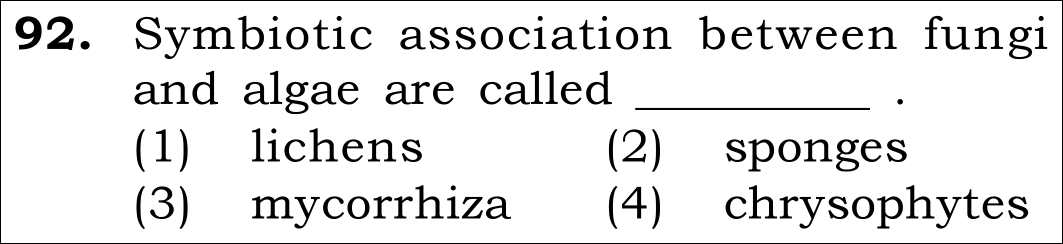
The 30-Second Exam Hall Shortcut: ⚡ Phycobiont + Mycobiont = Lichen
Fungi + Algae = Lichen! Fungi + Tree Roots = Mycorrhiza!
Step-by-Step Rigorous Workflow & Mathematical Proof
Define the Biological Nature of Lichens
Lichens represent a classic mutualistic symbiosis between two distinct kingdoms of organisms: an autotrophic photosynthetic partner (alga or cyanobacterium) and a heterotrophic fungal partner.
- • Phycobiont: Green alga (Chlorophyceae) or cyanobacterium; prepares food for fungi.
- • Mycobiont: Ascomycete or Basidiomycete fungus; provides shelter and absorbs water and mineral nutrients.
Contrast with Other Options
1. Sponges: Multicellular diploblastic aquatic organisms belonging to animal Phylum Porifera. 2. Mycorrhiza: Symbiotic association between fungi and the roots of higher gymnosperms/angiosperms (e.g., Pinus). 3. Chrysophytes: Diatoms and golden algae (desmids) belonging to Kingdom Protista.
- • Option (1) is the only valid term.
Ecological Significance
Lichens are pioneer colonizers on bare rock during ecological succession (lithosere) and serve as sensitive bioindicators of air pollution (especially SO₂).
- • Matches Option (1).
360° Option Elimination Engine Key Feature
Diagnose every choice: Know exactly why the right option works and why distractors fail.
Exact biological definition of alga-fungus symbiotic association.
Incorrect. Sponges are invertebrate animals (Phylum Porifera).
Incorrect. Mycorrhiza is the symbiotic association of fungi with roots of higher plants, not with algae.
Incorrect. Chrysophytes are photosynthetic protists (diatoms and golden algae).
NTA Trap Alert: Confusing Lichens with Mycorrhiza
Both lichens and mycorrhizae involve fungi in symbiosis! Remember: Fungus + Alga = Lichen; Fungus + Root = Mycorrhiza (rhiza = root).
Core NEET Syllabus Standard
"Lichens are dual organisms composed of an algal phycobiont and a fungal mycobiont."